Posts

On The First of the Signs

Image
An Exegetical Essay on John 2:1-11 ΚΑΙ ΤΗ ΗΜΕΡΑ ΤΗ ΤΡΙΤΗ ΓΑΜΟC ΕΓΕΝΕΤΟ ΕΝ ΚΑΝΑ ΤΗC ΓΑΛΙΛΑΙΑC The second chapter of the Gospel of John opens with an account of what the author designates as the first (1:11) of seven specific “signs,” or illustrative deeds Jesus did that confirmed his identity as Israel’s Messiah; changing water into wine at a wedding in Cana of Galilee. Because this event is not found in any of the Synoptic Gospels, none of the details can be confirmed or explained by appeals to the other Evangelists’ points of view. That, along with the fourth Gospel’s single perspective, with its economy of detail and simplicity of expression, has provided great scope for scholarly imaginations to run, often leading to exegetical uncertainty and highly speculative interpretations.

“Coin-eh” or “Keen-ee”?

Image
How do you pronounce Κοινή? Like most English-speakers who learn Koine Greek, I learned Erasmian pronunciation , the standard academic method for non-Greeks since, well, Erasmus of Rotterdam produced his Novum Instrumentum omne in 1516; and judging from this post on the Logos Bible software blog, "Academic," it will remain so for a long time to come.

In the Beginning was...C3PO?

Image
Star Wars and Greek? How could I resist posting it?

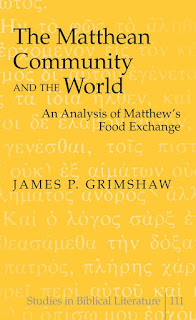
What's Wrong with This Picture?

Image
A display of Greek Geek cred Update 17/11/15 Well, I feel a bit of a fool... In an email conversation, the author of the book below, Dr. James Grimshaw , associate professor of history, politics, and religious studies at Wisconsin's Carroll University , pointed out that his book was one of a series the publisher had put together; so the cover wasn't unique to his book. Of course; a series. The "Studies in Biblical Literature" series as mentioned right on the cover! I guess I couldn't see the English forest for the Greek trees. I'm not only a Greek Geek; I'm blind, too. Oh well, I still enjoyed tracking down the text and highlighting it. Oh, and three cheers for Dr. Grimshaw for taking the time to hit me hard with the clue bat!

On "Eject the Evil"

Image
An Exegetical Essay on 1 Corinthians 5:9-13 The Apostle Paul wrote his “first” letter to an astonishingly depraved Corinthian church rife with syncretistic factionalism (1:12, 3:4), sexual immorality (5:1) and shameless self-promotion (5:2, 6). Whether dragging their internecine disputes before the gentile magistrates of the public courts (6:1-8) or conducting themselves deplorably at the Lord’s Supper (11:17-22), inside and outside the church, the Corinthians continually debased the name of Christ and shamed the Family of God. In anticipation of his imminent arrival (4:19), Paul’s epistle puts the whole church on notice by unflinchingly detailing every unseemly issue and unchristian practice he intends to correct when he gets there.

On "The Apostle of England"

Image
A Brief Sketch of William Tyndale William Tyndale From its earliest days, the Church has relied on the act of translation to pass on and preserve the Word of God. From the insular Semitic consonants of the Lord’s Apostles, the Gospel of Jesus Christ was reworked into the transnational dialects of the Greek Koine and spread to God’s people beyond Judea. It later moved into the imperial majuscules of the Holy Roman Latin of Western Europe, where it stayed, a prisoner of a calcified ecclesiology, until the Protestant Reformation twelve-hundred years later. In Great Britain, it was the reformer and gifted linguist William Tyndale (c.1492-1536) who, in translating the New Testament directly from Greek to English, liberated it from the Latin fetters of the clerics and made it available to even the ploughboys of England.

On "Christianity Meets Modernity"

Image
New Worlds, New Challenges and New Churches "Crystal Palace" The nineteenth century gave no respite to a traditional Christianity still reeling from the social upheavals of the 1700s. After such seismic shocks as the Enlightenment, the French and American Revolutions, the rationalism of Leibniz and Kant, and the first of the Great Awakenings, the traditional churches of Europe and America tumbled into the uncertainties of modernity off-balance, unsure and, for the most part, unprepared. All the consequences of the movements begun in the previous century would be visited upon the Church throughout the modern era. Change was definitely in the air and the social, political and spiritual landscapes of Europe and America would be altered forever.